

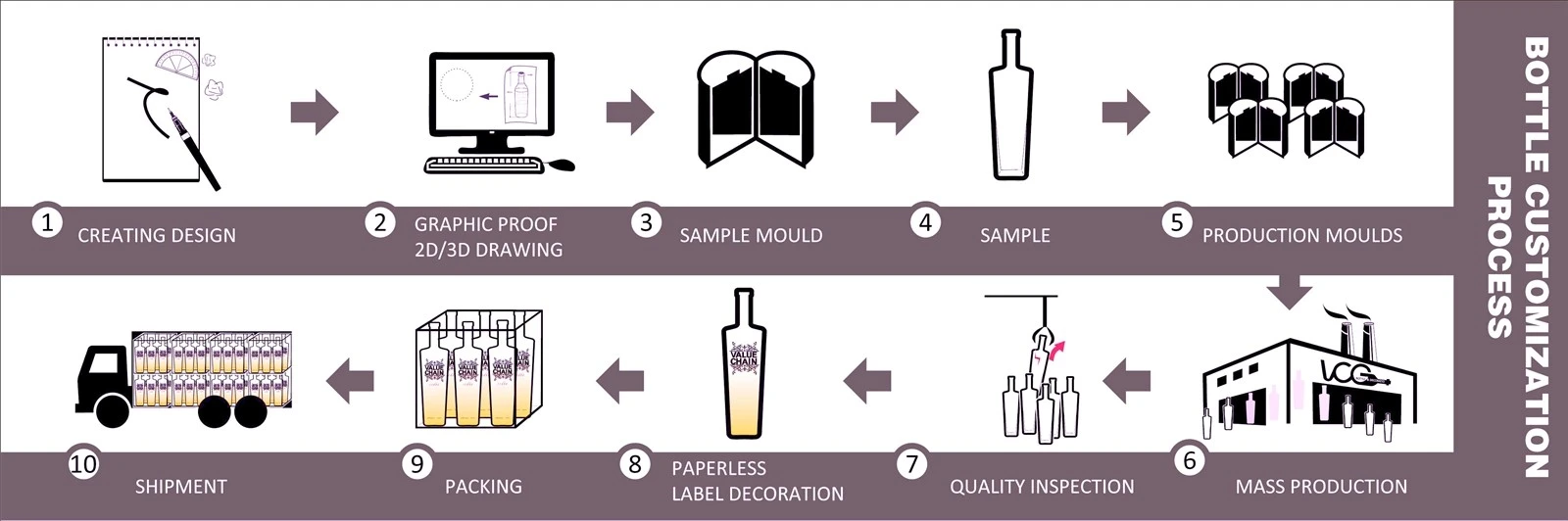
1. Glass bottle production process:
1. Raw material preparation:
The main material for glass production is sand. Clear glass is made from silica sand, a fine white sand that does not contain chemicals. Glass bottle factories melt sand into liquid at extremely high temperatures. Once melted, sand cannot return to its original state. This transformation turns the sand into a completely different structure. As the sand cools, it never forms a complete solid. It remains in a state between solid and liquid, called an amorphous solid. The molten glass is then placed in a mold to produce a molded glass bottle.
2. Batching:
All raw materials are mixed in specific proportions to ensure that the finished glass has consistent physical and chemical properties. The batching process requires high precision to avoid the mixing of impurities and deviations in proportions, which is critical to the quality of the final glass bottle.
Before starting the glass bottle manufacturing process, silica sand must be mixed with several other materials. A smaller proportion of soda ash (sodium carbonate) is added to lower the melting point of the sand. This allows the sand to melt faster in the furnace, saving energy. Adding soda ash alone to the sand will eventually produce a bottle that is able to dissolve in water. To avoid this, limestone (calcium carbonate) must be added. The resulting type of glass is called soda-lime glass, which accounts for about 90% of the world's glass production.
3. Melting
A mixture of silica sand, sodium carbonate, calcium carbonate and other oxides is fired in a refractory kiln at 1500 degrees Celsius to create the basis for glass.
4. Forming
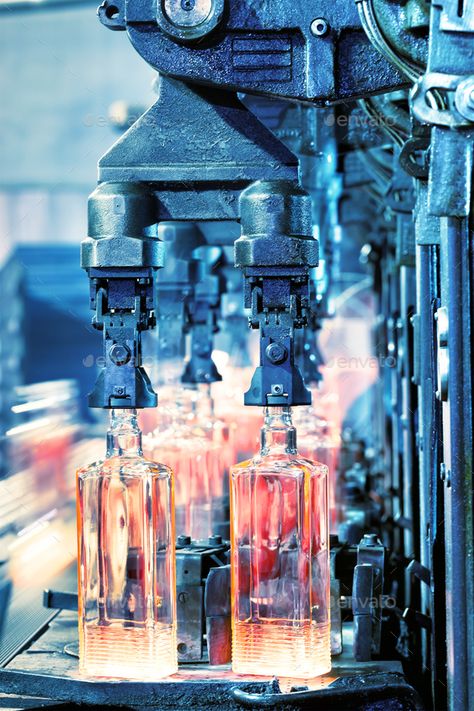
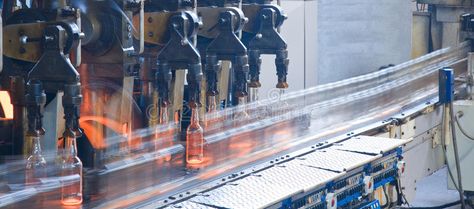
The molten glass flows through a launder into a forming machine, which blows or presses the glass into the desired bottle shape. Common forming methods include blow molding and press molding. Blow molding uses air to blow the glass into a mold to form the shape of the bottle; press molding uses mechanical pressure to force the glass into the mold. In this process, the design and manufacturing accuracy of the mold are critical to ensure that the size and shape of the bottle meet the design requirements.
5. Annealing
After forming, the glass undergoes an annealing process, which is a heat treatment process that enhances the chemical properties of the glass, thereby increasing its strength and durability. Sciendow Packaging ensures that it provides high-quality glass bottles and always conducts strict quality control inspections to prove that it meets industry standards for thickness, clarity and structural integrity.
6. Inspection and Trimming
After annealing, the bottles undergo a rigorous inspection for appearance and structural defects, which many bottles have. These limits are based on a contract standard called AQL (Acceptable Quality Level).
7. Packaging and Storage
After inspection and trimming, the glass bottles are packaged and prepared for transportation to customers or markets. Special attention needs to be paid to avoid collision and breakage between bottles during the packaging process to ensure that the bottles remain intact during transportation and storage.
2. How to choose high-quality glass bottles based on the manufacturing process.
1. Understand the manufacturer's production process.
When choosing a glass bottle, it is crucial to understand the manufacturer's production process. High-quality glass bottle manufacturers usually have advanced equipment and a strict quality control system to ensure that each production link meets high standards. For example, understanding their raw material sources, temperature control during the melting process, molding process, and annealing process can help evaluate their production capacity and product quality. The glass bottle factories that Sciendow packaging cooperates with are strictly selected by our company, and their manufacturing processes meet high standards.
2. Check the appearance and quality of the glass bottle.
High-quality glass bottles should have the characteristics of high transparency, uniform color, smooth surface without bubbles or cracks. When choosing a glass bottle, you can visually check the appearance of the bottle to detect whether it has defects. In addition, the strength and durability of the bottle can be judged by simple physical tests (such as knocking sound, bottle wall thickness detection, etc.). Sciendow packaging has an independent quality inspection team, and our quality control engineers test each glass bottle to ensure that Sciendow packaging's glass bottles meet customer quality requirements.
3. Understand the annealing process.
The annealing process is crucial to the strength and stability of glass bottles. When choosing glass bottles, you can ask the manufacturer about the details of the annealing process, including information such as the annealing temperature curve and cooling rate. Glass bottles that have been well annealed usually have better mechanical properties and durability. The factories that Sciendow packaging cooperates with have perfect annealing process details.
4. Check the quality inspection report.
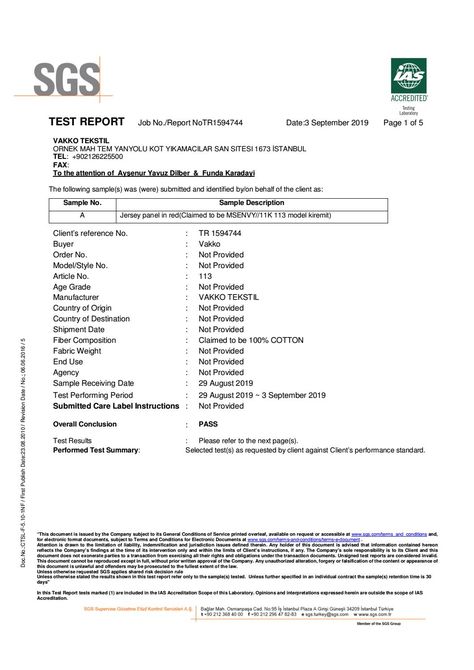
High-quality glass bottle manufacturers usually provide detailed quality inspection reports, including data on appearance, size, thickness, and pressure resistance. When choosing glass bottles, you can ask to see these inspection reports to ensure that the selected products meet the standards and requirements. Each glass bottle of Sciendow packaging can issue a corresponding SGS report.
5. Choose manufacturers with high environmental protection and safety standards.
When choosing glass bottles, manufacturers that follow environmental protection and safety standards should be given priority. This not only helps protect the environment, but also ensures that the production process of glass bottles is safe and reliable. Whether the manufacturer uses recyclable materials and whether measures are taken to reduce the discharge of waste gas, wastewater and waste residue are important indicators for evaluating its environmental protection and safety standards. Sciendow packaging cooperates with glass bottle factories and manufacturers that meet recycling environmental protection and safety standards.
6. Refer to customer reviews and feedback.
Customer reviews and feedback are important references for choosing high-quality glass bottles. By checking other customers' reviews, you can understand the manufacturer's product quality and service level. At the same time, choosing a manufacturer with a good reputation and credibility can guarantee the quality of the selected glass bottles to a greater extent. Sciendow packaging's products are sold to Europe, South America, Southeast Asia and other places, and are well received by customers!
3. How does Sciendow packaging ensure that all products are high-quality glass bottles?
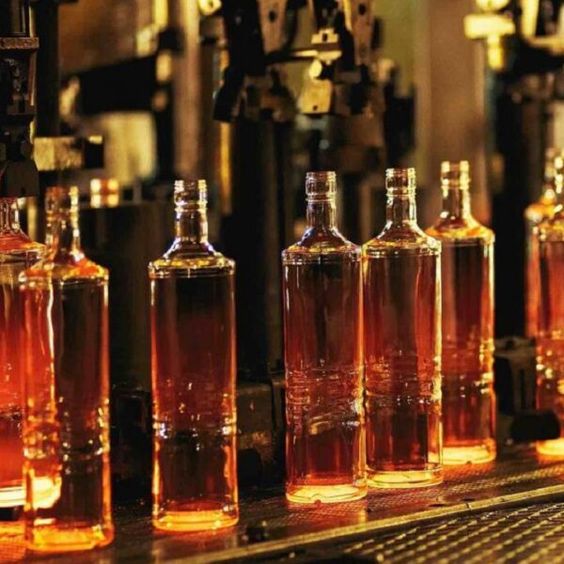
The production method of glass bottles is different from that of other industries. Because, no matter what the final product of glass manufacturing is, the raw material, that is, glass, must be produced first, and then the glass must be made into glass bottles.
Therefore, there are three variables in the manufacturing process of any glass bottle, namely:
① Material (glass) ② Machine (and mold) ③ Personnel.
If any of the variables can be controlled, then when production encounters difficulties, you can focus on the other two variables. If two factors can be controlled, then you can focus on the remaining variable. When all three variables can be controlled, there will be no production difficulties. The factories that Sciendow packaging cooperates with control all three of the above factors within a reasonable range.
1. Glass.
(1) Raw material quality control
In order to control product quality, Science packaging has certain quality requirements starting from the raw materials provided by mines or chemical plants. It stipulates the standards for particle size and chemical composition, and requires raw material suppliers to comply with these regulations as much as possible.
Sciendow packaging must test the chemical composition and grade of each batch of raw materials before picking up the goods. The main content of the test is the iron content in quartz sand and the grade of quartz sand.
Even if each batch of raw materials has a quality inspection certificate, Science packaging will conduct a re-inspection at least once a week.
(2) Batch material and glass composition control
Sciendow packaging also needs to determine a maximum and minimum variable range of the ingredients for the control of the ingredients, so Science packaging will conduct important screening. In order to obtain the best mixing and melting effect, all raw materials must meet the specified mesh requirements, which will help the homogenization of the glass.
The batching workshop selected by Science packaging meets the following requirements:
① The raw materials will not contaminate each other during transportation or weighing;
② Accurate weighing. There is a strict management system, and the weighing accuracy is checked every day;
③ Mix evenly, and check the mixing standard at least once a week;
④ The transportation and storage of the batch materials should be close to each other.
And the workshop will also have control over the kiln operation:
① The kiln load temperature is correct;
② The feeding system is appropriate;
③ The liquid level is stable;
④ Pay attention to the oxygen in the exhaust gas.
With the above simple control system, the glass composition can be controlled in the factory cooperating with Sciendow packaging.
2. Machines (and molds).
The feeders and molding machines selected by Sciendow packaging must be standardized, and the following factors will be considered:
① Train personnel according to the prescribed plan;
② All feeders and molding machines meet the latest standards;
③ Adopt a planned maintenance plan:
④ Maintain and calibrate the mold according to the unit operating system.
Only feeders and molding machines with the above four points are selected by Sciendow packaging.
3. Personnel.
The cooperative factories selected by Science Packaging will regularly train operators and do a good job in standardization and control plans in the following three aspects:
(1) Standard shearing device and water spray system
(2) Standard operation recording device
(3) Standard mold equipment device
Therefore, the operators selected by Science Packaging for operation change must be strictly trained and organized, and be under good supervision. In order to change the feeder and molding machine from one operating condition to another, everyone must cooperate with each other, because the longer the change time, the longer the production process will be affected.

Sciendow Packaging strictly controls every link in the production process and makes selections based on the key points in the manufacturing process. Therefore, Science Packaging can more effectively purchase high-quality glass bottles for consumers and meet the high standards of the market and customers. And with the continuous advancement of glass bottle manufacturing technology and continuous improvement of processes, Science Packaging's glass bottles will be more efficient, environmentally friendly and safe.