

Screw Bottle Cap
SCIENDOW : Your Trustworthy Screw Bottle Cap Supplier!
Our company has 10 years of experience and specializes in glass packaging. We can help customers find packaging solutions that meet their specific needs, including custom design, branding and sustainability requirements. We offer flexibility in material selection, design and suppliers.
Rich Products
We can produce wine bottles, champagne bottles, perfume bottles, ice wine bottles, glass bottle labels, wine bottle labels, spirit glass bottles, olive oil bottles, screw caps, bottle stoppers, medicine bottles and more.
Customizable
We have 10 years of experience in making glass bottles. Our products can be OEM customized and we create the graphic elements of the packaging such as illustrations, images, patterns and text. And depending on the project, we may also be involved in the structural design of the packaging.
Quality Guaranteed
The products we produce have ISO9001 quality management system certification. Before the inspection process begins, we define and establish clear packaging material quality standards and specifications based on your needs and manufacturer. These standards can cover aspects such as size, material composition, color, printing quality, and more.
Leading Service
We complete the R&D, production, marketing, sales and technical support processes independently. Whether you want to buy champagne bottles or perfume bottles, just email your requirements and we can customize the product for you.
-
![Wine Bottle Screw Bottle Cap]() Wine Bottle Screw Bottle CapThe wine bottle screw cap, often referred to as a screw cap or Stelvin closure, has emerged as a modern and practical alternative to the traditional cork stopper for sealing wine bottles.read more
Wine Bottle Screw Bottle CapThe wine bottle screw cap, often referred to as a screw cap or Stelvin closure, has emerged as a modern and practical alternative to the traditional cork stopper for sealing wine bottles.read more -
![Metal Screw Bottle Caps]() Metal Screw Bottle CapsMetal screw bottle caps, a ubiquitous yet essential component in the packaging industry, play a vital role in preserving the freshness and integrity of a wide range of beverages and liquid products.read more
Metal Screw Bottle CapsMetal screw bottle caps, a ubiquitous yet essential component in the packaging industry, play a vital role in preserving the freshness and integrity of a wide range of beverages and liquid products.read more


What is Screw Bottle Cap
A screw bottle cap is a type of closure or lid that is screwed onto the top of a bottle to seal the contents inside. It usually consists of a plastic or metal cap with screw threads on the inside that match the bottle's threads, and a gasket or seal on the bottom to prevent leakage or air entry. Screw bottle caps are commonly used for water bottles, soda or juice bottles, and other beverage or food containers. They are easy to open and close, and can be reused or recycled.
Features of Screw Bottle Cap
Convenience
The screw cap is easy to open and reseal, making it convenient for consumers who want to enjoy a glass of wine without the hassle of removing a cork.
Longevity
The Screw Bottle Cap provides a reliable seal that can help preserve the wine's freshness and flavors for an extended period of time.
Cost-Effectiveness
Screw caps are generally less expensive than traditional cork closures, making them a more affordable option for winemakers.
Consistent Quality
The Screw Bottle Cap ensures a consistent seal, reducing the risk of cork taint or oxidation that can occur with traditional cork closures.
Types of Screw Bottle Cap
Continuous thread caps are among the most popular types of screw bottle caps and come in various sizes and styles. They have a threaded interior that matches the bottle's neck finish, which helps create a secure and tight seal. Continuous thread caps are commonly used for beverage bottles, medical solutions, and other products that require a reliable seal.
Flip-top caps, also known as snap-top or hinge-top caps, have a hinged opening on the top that allows easy dispensing without removing the entire cap. They are commonly used for products that need frequent access such as shampoo and condiments. Flip-top caps also come in tamper-evident and child-resistant versions for added safety and security.
Cork-top caps are traditionally used for wine bottles and are made of cork and wood for eco-friendliness. They create a tight seal that prevents evaporation and oxidation, maintaining wine quality. While they are not as common as the previous caps mentioned, they are still used for artisanal and specialty beverages.
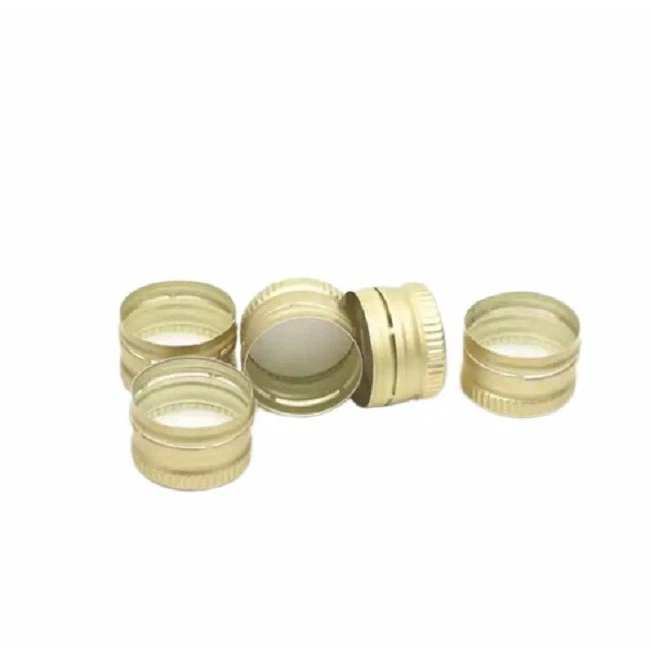
A metal screw cap is a metal cap used to seal bottles, usually made of aluminum. It has spiral internal and external threads that can be rotated open and closed. Metal screw caps are widely used on bottles in the food, beverage, pharmaceutical and cosmetic industries to ensure product sealing and freshness and prevent contamination and leakage.
Materials of Screw Bottle Cap

Aluminum
Aluminum is a lightweight, durable metal that is commonly used in the production of screw bottle caps. Aluminum caps are typically used for high-end products, such as perfume, wine, and liquor bottles. They are prized for their aesthetic appeal and are often embossed or printed with the brand name or logo.

Stainless Steel
Stainless steel is a strong, durable metal that is resistant to corrosion and wear. Stainless steel bottle caps are commonly used for packaging liquids that require a high degree of protection, such as chemicals, pharmaceuticals, and food. They are easy to sterilize and can be used in sterile environments without compromising the quality of the product.
Raw Material Selection
The first step in the process of screw bottle cap manufacturing is the selection of the appropriate raw materials. The primary materials used for making screw bottle caps are Polyethylene Terephthalate (PET), Polypropylene (PP), and High-Density Polyethylene (HDPE). The type of material used depends on the specific application and requirements of the customer.
Molding
The second step is the molding process, which is done using an injection molding machine. The machine melts the raw material and shapes it into the desired shape of the bottle cap. During the molding process, a mold is used to shape the plastic into the desired shape. The mold consists of two parts, a core and a cavity. These parts come together to create the shape of the bottle cap.
Trimming
Once the molding process is complete, the next step is trimming. This process involves removing any excess plastic left over from the molding process. Trimming is usually done using a machine that cuts off the excess plastic using a sharp blade or laser. Trimming ensures that the screw cap is uniform in shape and size.
Quality Inspection
Quality inspection is an essential step in the process of manufacturing screw bottle caps. This step ensures that the final product meets the required specifications. During quality inspection, the caps are inspected for any defects such as cracks, deformities, or inconsistencies in color and shape. Quality inspection is usually done manually, but automated inspection systems are also used for high-volume production.
Packaging
The final step in the process of screw bottle cap manufacturing is packaging. This involves packing the caps in bags or boxes, depending on the customer's requirements. Packaging is done using an automated system, which ensures that the product is packed uniformly and correctly. Once packed, the screw bottle caps are then ready to be shipped to customers.
How to Choose Screw Bottle Cap



Material
One of the most important factors to consider when choosing a screw bottle cap is the material used to make it. Bottle caps can be made from various materials, including plastic, metal, and glass. Each material has its unique advantages and disadvantages. For instance, plastic caps are lightweight, cost-effective, easy to manufacture, and can be easily recycled. On the other hand, metal caps offer excellent durability, strength, and resistance to temperature variations.
Size
Bottle caps come in different sizes depending on the type of bottle they are meant to fit. When choosing screw bottle caps, you should consider the neck size of your bottle to ensure that the cap fits perfectly. Common sizes for bottle necks include 24/410, 28/400, and 33/400.
Liner Type
The liner is the inner material that provides a seal between the bottle and the screw cap. The liner type you choose will depend on the product you are packaging. Different liner types include foam liners, pressure-sensitive liners, and induction liners.
Closure Type
Screw bottle caps come in different closure types, including continuous thread, child-resistant, tamper-evident, and snap-on. The type of closure you choose will depend on the intended use of the bottle. For instance, if you are packaging products that should be kept away from children, you should consider child-resistant caps.
Color
Bottle caps come in different colors, which can add aesthetic value to your packaging. Additionally, colored caps can help identify different products or flavors. When choosing colors, you should consider the branding and marketing strategy of your product.
Surface Finish
Screw bottle caps can come in different surface finishes such as matte, glossy, or textured. Each surface finish has its unique advantages. For instance, matte finishes can provide an elegant look, while textured finishes can improve grip when opening the bottle.
Compatibility
Lastly, when choosing screw bottle caps, you should ensure they are compatible with the filling equipment you are using. Different filling machines may require specific bottle cap types, sizes, and materials.
Keep Them Clean
The first step in maintaining screw bottle caps is to keep them clean. Cleanliness is critical, especially in the food and beverage industry, where contamination can lead to severe health issues. To clean screw bottle caps, you need to use warm water, soap, and a brush. First, remove any debris or dirt on the cap using a dry cloth. Dip the brush in the soapy water and scrub the cap thoroughly, especially the threads. Rinse the cap with clean water and dry it with a clean cloth.
Lubricate the Threads
Screw bottle caps have threads that can wear out over time, leading to difficulty in opening or closing the bottle. To prevent this, it is essential to lubricate the threads regularly. You can use food-grade lubricants such as vegetable oil or silicone lubricants to lubricate the threads.First, remove the cap from the bottle and clean it thoroughly as described in step 1. Apply a small amount of lubricant to the threads, ensuring it covers the entire area. Use a clean cloth to remove any excess lubricant. Reattach the cap to the bottle and twist it back and forth a few times to distribute the lubricant evenly.
Inspect the Sealing Gasket
The sealing gasket is a rubber or silicone ring found in the cap that ensures a tight seal when the bottle is closed. It can become worn out or damaged over time, leading to leaks. It is essential to inspect the sealing gasket regularly to ensure it is in good condition.To inspect the sealing gasket, remove the cap from the bottle and examine the gasket closely for cracks, tears, or other damage. If you notice any damage, you need to replace the gasket with a new one. Sealing gaskets are readily available in most hardware stores and online.
Store Them Correctly
Storing screw bottle caps correctly is essential to prevent damage or contamination. You should store them in a cool, dry place away from direct sunlight. Avoid stacking them on top of each other or in a way that can cause pressure on the caps. When storing them, ensure they are not in contact with other chemicals, including cleaning agents.
Use Them Correctly
Using screw bottle caps correctly is essential to prevent damage or malfunction. Ensure you use the right cap for the right bottle to ensure a tight seal. Do not over-tighten the cap as this can damage the threads. When opening a bottle, avoid using excessive force or using tools such as pliers as this can cause damage to the cap or bottle.
How to Store Screw Bottle Cap
Sorting and Organizing
The first step in storing screw bottle caps is to sort and organize them. The caps should be sorted by size, type, or color, depending on the preference of the user. An effective way to do this is to use a compartmentalized organizer box or tray. These organizers come in various sizes and can be found at any hardware or craft store. Using these organizers will help to keep the screw caps separate and easy to find.
Labeling
It is important to label each screw cap with the corresponding item or container. This can be done easily by writing on the cap itself or by attaching a label with adhesive. Labeling is especially important when storing caps that are the same size and color but are used for different products. By labeling the caps, this will help to prevent confusion and mistakes.
Using Magnetic Containers
Using magnetic containers is an effective method of storing screw bottle caps. The magnetic force will keep the caps in place and prevent them from spilling. Magnetic containers can be found in hardware stores or online, and they come in various sizes. These containers can be mounted on a wall or placed on a shelf, and they are an excellent way to store screw bottle caps without taking up too much space.
Bagging and Labeling
Another option for storing screw bottle caps is to place them in plastic bags. When storing in bags, it is essential to keep the caps separate by type or size and label each bag accordingly. This method ensures that the caps will not be lost and makes it easy to transport them.
Using a Board and Rack
A wooden board or rack can be a great option for storing screw bottle caps. The board or rack should have holes drilled into it that are the same size as the caps. The caps can be placed into the holes and held in place, making it easy to find and access the necessary caps.
Using a Hook and Loop Strip
Using a hook and loop strip is a great method for storing screw bottle caps. The strip can be cut to size and then attached to a wall or cabinet. The caps can be attached to the strip and removed easily when needed. This option is perfect for those who have limited space and want to keep the caps in clear view.
Frequently Asked Questions
Q: What material is typically used to make screw bottle caps?
Q: How does a screw bottle cap work to seal a bottle?
Q: What are some common sizes of screw bottle caps?
Q: Are screw bottle caps reusable?
Q: Can screw bottle caps be customized with logos or designs?
Q: What is the recommended torque for tightening a screw bottle cap?
Q: Are screw bottle caps typically used for glass or plastic bottles?
Q: What is the average lifespan of a screw bottle cap?
Q: Can screw bottle caps be sterilized?
Q: What is the maximum pressure that a screw bottle cap can withstand?
Q: Are there any environmental concerns with screw bottle caps?
Q: How do screw bottle caps compare to other types of closures, such as cork or snap-on caps?
Q: What is the history of screw bottle caps?
Q: How does the thread pitch of a screw bottle cap affect its performance?
Q: Can screw bottle caps be used for carbonated beverages?
Q: What are some common colors for screw bottle caps?
Q: Can screw bottle caps be recycled?
Q: How does the shape of a screw bottle cap affect its functionality?
Q: Can screw bottle caps be used for hot liquids?
Q: Are there any safety concerns associated with screw bottle caps?
As one of the leading screw bottle cap manufacturers and suppliers, we warmly welcome you to wholesale high-grade screw bottle cap in stock here from our factory. All customized products are with high quality and competitive price.